
When you bring home a carbon monoxide detector, it’s tempting to just stick it into the nearest open outlet or mount it right next to your smoke alarm. But placement matters more than you might think. Put it too close to the furnace or stove, and you’ll deal with constant false alarms; stick it in the wrong corner, and you might sleep right through a real emergency. Because carbon monoxide is completely invisible and odorless, that detector is your only safety net. Here is exactly where to install your alarms, how high to mount them, and how many your home actually needs.
Where Should Your First Carbon Monoxide Detector Go?
Your first carbon monoxide detector belongs in a central spot outside each separate sleeping area. From there, you should add one on every level of your home, including the basement; along with any additional spots your local code requires.
Trying to protect your space on a budget? Sleeping areas should always be covered first. Early carbon monoxide symptoms, like dizziness, nausea, headaches, and confusion, go completely unnoticed when you’re asleep. That makes a hallway detector your only real defense, and it must be close enough to wake the entire household. If that alarm ever sounds, head outside immediately for fresh air and call 911.
How High Should You Mount a Carbon Monoxide Detector?
Our experts recommend that you mount your carbon monoxide detector at the height its manual lists. The high-or-low rule for smoke alarms doesn’t carry over to carbon monoxide, which weighs almost the same as air.
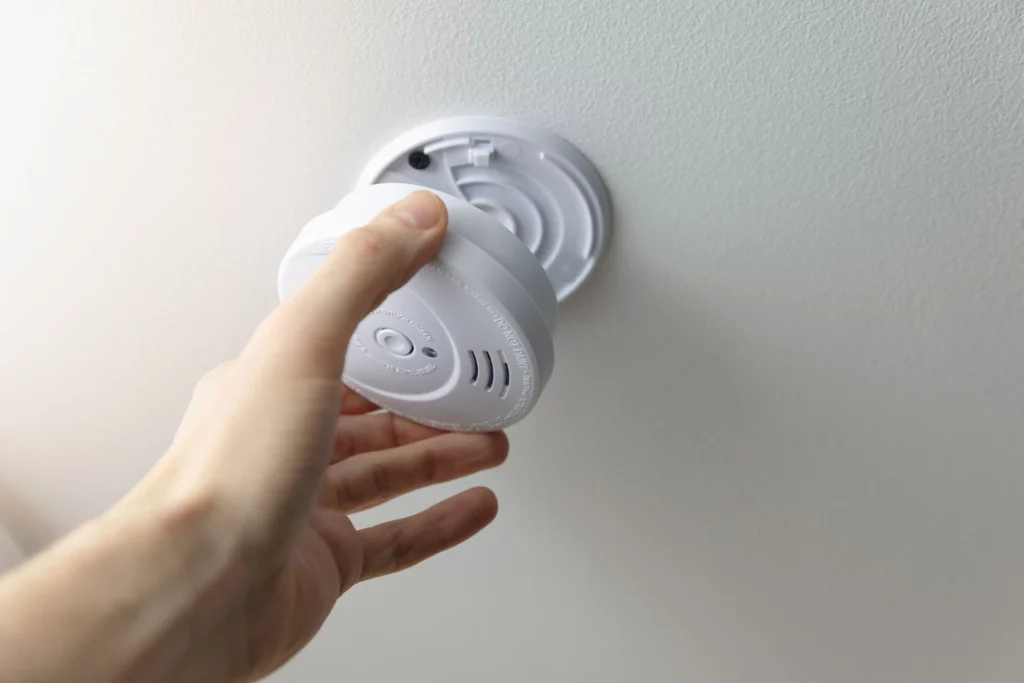
This means that, depending on the model, a carbon monoxide alarm mounts on a wall, on the ceiling, or in an outlet. Each spot on this list has its own points of consideration:
On a wall: If you’re mounting your CO2 detector on your wall, follow your manual’s height recommendations, and keep the alarm out of the corner where the wall meets the ceiling. Additionally, if your alarm has a digital display, make sure you mount it where you can read the numbers without a step stool.
On the ceiling: A ceiling mount works as long as your model is one that’s suitable for ceiling mounting. Combination smoke and carbon monoxide units usually go there.
In an outlet: Plug-in models work well at outlet height, because carbon monoxide mixes evenly with the air rather than rising directly to the ceiling. Just be sure to choose an outlet that isn’t controlled by a wall switch so you don’t accidentally cut power to the unit.
<IMAGE>
How Should You Place Carbon Monoxide Detectors Room by Room?
Two primary factors should guide your alarm placement: audibility near sleeping areas and safe clearance from fuel-burning appliances.
| Room | Where to Place It and Why |
| Hallway outside the bedrooms | Put one here, in a central spot you can hear from each bedroom. If you live in a bigger home, First Alert recommends an alarm at each end of a hallway longer than 40 feet. |
| Bedrooms | Add one inside each bedroom if your doors stay shut at night. A closed door can slow carbon monoxide on its way to the hallway alarm. |
| Basement | Your basement counts as a level, so it needs its own alarm. First Alert suggests placement at the top of the basement stairs for most homes. |
| Furnace or utility room | Keep the alarm out of this room, but cover this level locally from the nearest hall or living space. |
| Kitchen | Keep the alarm out of your kitchen. An alarm too close to a gas range can sound during normal cooking. |
| Attached garage | Keep the alarm out of the garage itself, but cover this level locally from the nearest hall or living space. |
| Living room | Place a detector in this room only if it’s the most central spot on that level. Keep the alarm away from the fireplace, ceiling fans, and vents. |
Minimum distance requirements from fuel-burning appliances vary by brand. Kidde recommends a 15-foot buffer from heating sources to avoid nuisance alarms, while First Alert calls for at least 20 feet. Always check your alarm’s manual for its specific clearance rule, and position the unit in an adjacent hallway or living area rather than right next to the burner.
Why Garages Are Off-Limits
While cars and gas equipment make attached garages a common carbon monoxide hazard, the garage environment will quickly disable your detector. Temperature swings routinely exceed the standard 40°F–100°F operating range, and concentrated exhaust, dust, and stored household chemicals will degrade or blind the sensor. If you’re concerned, you can limit your garage’s risk factors by mounting your detector just inside the interior door connecting the garage to the house.
How Many Carbon Monoxide Detectors Do You Need?
You need at least one carbon monoxide alarm on every level of your home, plus one outside each separate sleeping area. So, in the case of a two-story home with a basement and all the bedrooms upstairs, you’d need at least three alarms: one in the upstairs hallway, one on the main floor, and one in the basement. The upstairs hallway alarm covers both your bedrooms and that floor.
Why Do Interconnected Alarms Matter?
An alarm in your basement may not wake anyone two floors up behind a closed bedroom door. Interconnected alarms close that gap, because when one alarm senses carbon monoxide, they all sound. CPSC names interconnected alarms as the setup it prefers. Hardwired alarms with battery backup also keep working when the power goes out.
If you’d rather hire a pro for carbon monoxide detector installation, Benfield Electric installs interconnected, hardwired units with built-in battery backups. For older homes without existing wiring in the right spots, an electrician will need to run new lines between levels. If you’re already planning a wider home rewiring project, bundling your alarm wiring into the same job will save significant time and labor costs. Contact us today to learn more and to quote your project.
What Does Harford County Code Require?
Harford County mandates carbon monoxide alarms outside every sleeping area for any home with an attached garage or fuel-burning equipment. This applies to new construction as well as existing homes undergoing permitted work. By code, all units must be UL 2034 certified and installed per manufacturer guidelines.
Adding hardwired alarms requires an electrical permit. Benfield Electric pulls the necessary permits and coordinates the final county inspection on every job. (Living in Baltimore or Cecil County? Check your local building codes, as county standards differ.)
Where Shouldn’t You Put a Carbon Monoxide Detector?
An alarm in the wrong spot can miss gas that’s there, or go off when nothing’s wrong. Here are a few rules to help you determine where not to put an alarm:
- Don’t put an alarm closer to a furnace, water heater, fireplace, or gas range than its manual allows.
- Keep alarms out of furnace rooms, kitchens, and garages.
- Keep alarms out of bathrooms, laundry rooms, and other steamy spaces.
- Keep alarms away from windows, exterior doors, and drafty spots.
- Keep alarms away from vents, flues, chimneys, and ceiling fans.
- Skip dead-air spaces, such as the peak of a vaulted ceiling.
- Don’t hide an alarm behind curtains or furniture that block air from reaching the sensor.
- Keep alarms out of spaces colder than 40°F or hotter than 100°F, such as attics, crawl spaces, and porches.
How Close Can a CO Detector Be to a Gas Stove?
Keep carbon monoxide alarms out of the kitchen entirely and at least 5 to 15 feet away from gas stoves. While major manufacturers like Kidde and First Alert cite 5 feet as the bare minimum, Kidde recommends a 15-foot buffer to prevent nuisance alarms during normal cooking. That extra cushion is critical: if routine cooking keeps triggering your alarm, you’ll be tempted to disable or unplug it, leaving your home completely unprotected.
Do Combination Smoke and CO Detectors Go on the Wall or Ceiling?
Combination smoke and carbon monoxide detectors must always follow smoke alarm placement rules: mount them on the ceiling or high on the wall. Because smoke rises, the sensor must sit where smoke gathers—which means combination units should never be plugged into standard wall outlets. Always check the manufacturer’s manual for specific ceiling clearance specifications (typically 4 to 12 inches down if wall-mounted).
In Harford County, combination units must also follow local smoke detector spacing codes:
- Distance from cooking appliances: Photoelectric alarms require at least 6 feet of clearance, while ionization models need 20 feet (or 10 feet if equipped with a temporary silencing hush button).
- Distance from bathrooms: Maintain at least 3 feet of clearance from any bathroom door containing a tub or shower to avoid steam-induced false alarms.
Local code mandates smoke alarms inside every bedroom, but requires carbon monoxide coverage in the hallway outside sleeping areas. Installing combination units inside each bedroom and along the hallway satisfies both requirements at once. If your existing smoke alarms are already up to code, adding a standalone CO detector is still a viable option. For new setups, Benfield Electric installs combination units during standard smoke detector installations, bringing your home into full dual-hazard compliance in a single visit.
Carbon Monoxide Detector Placement FAQs
Does carbon monoxide rise or fall?
Neither; and this is one of the most common home safety myths. Carbon monoxide is virtually the same weight as air, so it blends evenly into the room rather than floating or sinking. That means height matters far less for a standalone CO alarm than room location does. Just mount the unit at eye level, plug it into a low outlet, or place it on the ceiling according to the manufacturer’s directions.
How far should a carbon monoxide detector be from a bedroom door?
Put it in the hallway right outside your bedrooms, close enough that everyone can hear it from bed. Harford County code calls for the immediate vicinity of the bedrooms without setting a distance in feet. If you live in a home that has a hallway longer than 40 feet, First Alert recommends that you place an alarm at each end.
Can you plug a carbon monoxide detector into a low outlet near the floor?
Yes, if it’s a plug-in model made for outlet use. We recommend that pick an outlet that a wall switch doesn’t control, and keep the alarm clear of furniture and curtains.
How far should a carbon monoxide alarm be from fuel-burning appliances?
Clearance guidelines depend on the manufacturer, but the general rule is to avoid placing an alarm directly next to any combustion source:
- Stoves and cooking equipment: Maintain a minimum distance of 5 feet, though 15 feet is ideal to prevent false alarms during normal cooking.
- Furnaces and water heaters: Kidde requires at least 5 feet (15 feet recommended), while First Alert specifies a 20-foot buffer.
Always default to the specific distance printed in your unit’s manual, and err on the side of greater distance to avoid nuisance tripping.
Is it bad to put a carbon monoxide detector right next to a furnace?
Yes, it’s a poor spot for the alarm. Kidde and First Alert both say to keep alarms out of furnace rooms, and an alarm that close is more likely to go off when nothing’s wrong. Put that level’s alarm in a nearby hall or living space instead.
What should you do if your carbon monoxide alarm goes off?
Get everyone outside to fresh air right away, then call 911. Don’t go back inside until responders tell you it’s safe.
Get Your Carbon Monoxide Alarms Placed and Wired Correctly
A plug-in alarm is easy to install yourself once you know the right location, but interconnected, hardwired systems require professional electrical work to function safely. Whether you need a troubleshooting repair or a brand-new installation, Benfield Electric brings decades of trusted expertise to homeowners across Harford County and surrounding communities.
Benfield Electric has been family-owned since 1968, providing fully licensed, A+ BBB-accredited electrical care with same-day service for qualifying repairs. Call (410) 879-1485 today to schedule your carbon monoxide alarm estimate.